Sign In
  • Australia
  • International
  • Canada
  • Europe
Education Times
  • Home
  • Education
    EducationShow More
    What kind of leader should you become?

    The kind of leader you become is important in determining the overall…

    5 Min Read
    What it takes to become a successful strategic learner

    One key to success in education and training is becoming a strategic…

    7 Min Read
    Instructional strategies: what are they?

    In order for students to be able to learn effectively, teachers use…

    5 Min Read
    Pandemic-related drop in enrolments and delays in student visa approvals causing chaos for RTOs

    The pandemic has caused a sharp drop in enrolments at many Registered…

    2 Min Read
    In their first meeting since the election, education ministers face a ‘massive’ teacher shortage

    The nation's unprecedented teacher shortage will dominate discussions between Australia's education ministers…

    3 Min Read
  • VET Sector
  • HEP Sector
  • School Sector
  • Australia
  • World
  • Science & Tech
  • Health
  • Sports
  • More
    • TV
    • Movies
Reading: Continuous problem-solving processes for a training organisation
Share
Education TimesEducation Times
Aa
Search
  • Home
    • Home News
    • Home 2
    • Home 3
    • Home 4
    • Home 5
  • Categories
  • Bookmarks
    • Customize Interests
    • My Bookmarks
  • More Foxiz
    • Blog Index
    • Sitemap
Have an existing account? Sign In
Follow US
© 2022 Foxiz News Network. Ruby Design Company. All Rights Reserved.
Education Times > Blog > News > Continuous problem-solving processes for a training organisation
News

Continuous problem-solving processes for a training organisation

Vijay
Last updated: 2022/11/24 at 3:51 PM
Vijay
Share
SHARE

One of the most important things for any training organisation is to have a good problem-solving process in place. This allows internal stakeholders to learn from their mistakes and improve their skills.

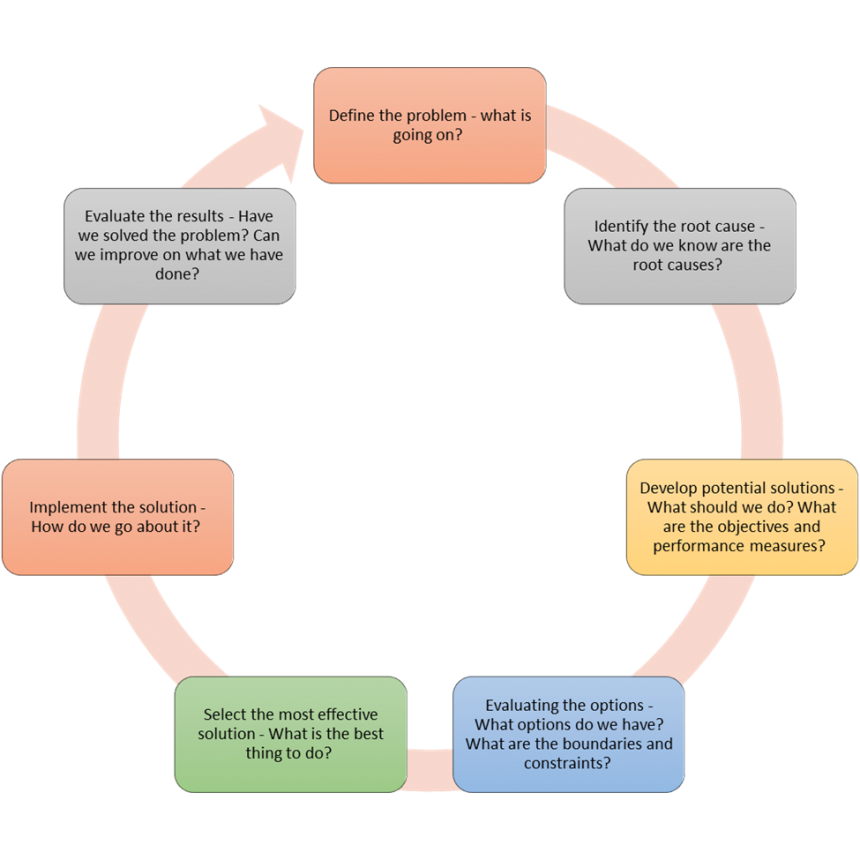
The seven most effective steps for continuous problem-solving for a training organisation include: 

  1. Define the problem – what is going on?
  2. Identify the root cause – What do we know are the root causes?
  3. Develop potential solutions – What should we do? What are the objectives and performance measures?
  4. Evaluating the options – What options do we have? What are the boundaries and constraints?
  5. Select the most effective solution – What is the best thing to do?
  6. Implement the solution – How do we go about it?
  7. Evaluate the results – Have we solved the problem? Can we improve on what we have done?

Taking each of these steps one at a time, let’s go over them in detail now:

  1. Define the problem: The first step in solving a problem is to identify and define the issue at hand. This can be done by brainstorming with a team or individual and looking at the problem from different angles. Once the problem is defined, it is important to set goals and objectives for solving it.
  2. Identify the root cause: The second step is to identify the root cause of the problem. This can be done by conducting research, collecting data, and analyzing information. Once the root cause is identified, it is important to develop a plan of action for addressing it.
  3. Develop potential solutions: The third step is to develop potential solutions to the problem. This can be done by brainstorming with a team or individual and considering different options such as conducting research. It is important to consider all potential solutions, no matter how far-fetched they may seem at first.
  4. Evaluating the options: Once all of the potential solutions have been generated, it is important to evaluate each one. This can be done by considering the cost, feasibility and effectiveness of each option.
  5. Select the most effective solution: After you identify a problem, it’s important to select the most effective solution. The most effective solution is usually the one that best solves the problem while causing the least amount of negative consequences. To select the most effective solution, you’ll need to consider all of your options and evaluate them against your criteria. Once you’ve selected a solution, you’ll need to implement it implement the solution and then monitor its effectiveness.
  6. Implement the solution: After the problem has been identified and a plan for solving it has been put in place, it is time to implement the solution. This step can involve putting the plan into action, testing the solution to see if it works, and making any necessary adjustments. Once the solution has been implemented, it is important to monitor the situation to make sure that the problem has been solved and that no new problems have arisen. This may require some ongoing tweaking of the solution, but eventually, with patience and perseverance, the problem should be resolved.
  7. Evaluate the results and outcomes: It is important to take the time to evaluate the results of implementing a solution. This will help to determine if the solution was effective and if any changes need to be made. It is also important to document the results so that future problem-solving efforts can be improved.


As an organisation, you must ensure that: 

  1. everyone in the organisation is aware of the process. This includes both staff and students.
  2. encourage everyone to share their problems with others. This can help them get feedback and ideas on how to solve the problem.
  3. have a system in place for tracking problems and solutions. This will help ensure that problems are solved effectively and efficiently.
  4. celebrate successes! recognise students and staff who have solved problems effectively. This will encourage others to do the same.
Subscribe to Our Newsletter

Subscribe to our newsletter to get our newest articles instantly!

Vijay November 24, 2022
Share this Article
Twitter Email Copy Link Print
Previous Article Students allegedly assisted in entering the country to work in the sex industry by Australian colleges
Next Article Choosing quality over quantity as a trainer
Leave a comment

Leave a Reply Cancel reply

Your email address will not be published. Required fields are marked *

Editor's Pick

Top Writers

Opinion

Interview with Wendy Perry – Managing Director, Workforce BluePrint

BIO: Wendy Perry Managing Director Workforce BluePrint Wendy Perry who…

November 24, 2022

The Instructional Design Process – The Five Steps

When designing training programs, instructional designers…

October 24, 2022

In vocational education and training, what is assessment?

In the VET sector, assessment refers…

August 12, 2022

Principles of assessment

An easy way to learn them:…

August 12, 2022

Rules of evidence

An easy way to learn them:…

August 12, 2022

You Might Also Like

News

CAQA Recruitment – The current job vacancies

Resource writers  CAQA Resources is looking for qualified instructional writers and subject matter experts to develop training materials for the…

0 Min Read
News

Australian gov’t to review HE in long-term plan

The government of Australia has announced a ‘Universities Accord’ designed to build a long-term plan for the country’s higher education…

1 Min Read
News

Australia declined 50% of student visa applications from India in 2022

Student from India, Nepal and Sri Lanka have had their request for student visa for Australia's vocational to higher education…

1 Min Read
News

New Victoria University program gives high school leavers ‘space’ to figure out future

The program was funded by a pool of state government money allocated to the university to research how to help…

1 Min Read
Education Times

News

Teaching

Learning

Jobs

More

Subscribe

  • FAQ
  • Newsletters
  • Topics

© Education Times Network. Online Media Solutions. All Rights Reserved.

Removed from reading list

Undo
Welcome Back!

Sign in to your account

Lost your password?