



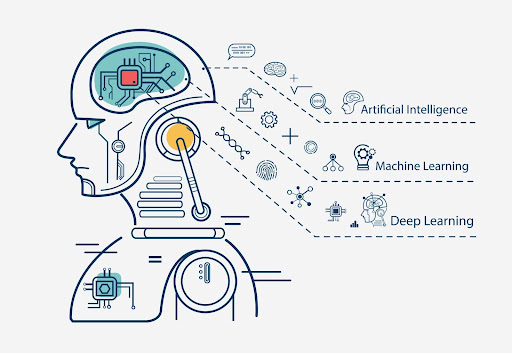
There’s a lot of talk about artificial intelligence and machine learning today, but what exactly is it?
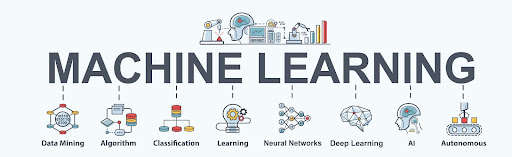
Machine learning is a process of developing computer programs that can learn from data without being explicitly programmed by a human. This gives it the ability to process large amounts of data and find patterns within them. Its development has led to significant advances in computational science and many experts predict this technology will lead to more change in society than even personal computing or the Internet.
Artificial intelligence is transforming almost every industry imaginable — from transportation (Google’s self-driving cars) to finance (robotic investment advisors) and healthcare (virtual doctors). Education and training are no exception. Artificial intelligence can be used in several ways: teaching, training and recruiting.
The education and training industry is an important sector of the economy. It is also a very complex one. AI and machine learning are changing how we learn, teach, and train. They are making it possible for us to learn in new ways, teach in new ways, and train in new ways.
In the classroom, you can expect AI to make a huge impact on education, creating personalised learning plans for students whilst also optimising lesson plans to better meet their needs. This is already happening today in higher education at institutions like MIT and Harvard University which use online learning platforms from companies like Coursera to deliver lectures directly to students according to their academic progress and readiness levels.
Personalised instruction will be a boon for teaching languages. The Association of Language Testers in Education notes that language educators have been using computer-assisted language learning (CALL) since the 1980s — with good results. But CALL has traditionally been based on programmed instruction where “the teacher’s role is to monitor and evaluate the learners’ responses and to provide corrective feedback where necessary.” Similarly, there are a number of companies today that use AI to automatically generate personalised instruction for language learners.
It is predicted that “fully autonomous personalised language tutors” will exist in the near future, thanks to advancements in natural language processing technologies that enable chatbots to converse naturally with individuals.
In the past, training was largely a one-way process where an instructor delivered content to some learners and those individuals made their best effort to absorb it. The advent of new technologies has given rise to two-way communication between instructors and students which makes learning a collaborative experience.
Machine learning gives companies a way to more efficiently assess learning outcomes by providing them with specific data through analytics about how different groups of learners have performed in the past. Data on student performance can be applied to future hires so that they fit better into teams from the start — saving time and money on training later down the road. Via machine learning, businesses can identify which students are most likely to complete training programs and become high-performing employees. It will also help reduce human errors by automating some tasks or replacing human teachers with AI teachers who are better at teaching concepts like math or science. The future of education will be more personalised and customised for every individual student. The rise in popularity of MOOCs (massive open online courses) has paved the way for this change.
Another big change: in the future, training and development will be a continuous process rather than something that happens once or twice a year. This is already happening today at companies like Google and Pivotal Labs where employees continue to learn no matter how long they have worked for the company thanks to daily on-the-job learning opportunities.
AI can even help recruiters find candidates by giving them access to personalised recommendations based on their unique needs. Today, many organisations are using automated recruiting platforms that provide them with tools to assess their own internal talent as well as assess external candidates against open roles based on skillsets and other qualifications.
How artificial intelligence and machine learning will change the education and training industry



Interview with Wendy Perry – Managing Director, Workforce BluePrint
BIO: Wendy Perry Managing Director Workforce BluePrint Wendy Perry who…