Sign In
  • Australia
  • International
  • Canada
  • Europe
Education Times
  • Home
  • Education
    EducationShow More
    What kind of leader should you become?

    The kind of leader you become is important in determining the overall…

    5 Min Read
    What it takes to become a successful strategic learner

    One key to success in education and training is becoming a strategic…

    7 Min Read
    Instructional strategies: what are they?

    In order for students to be able to learn effectively, teachers use…

    5 Min Read
    Pandemic-related drop in enrolments and delays in student visa approvals causing chaos for RTOs

    The pandemic has caused a sharp drop in enrolments at many Registered…

    2 Min Read
    In their first meeting since the election, education ministers face a ‘massive’ teacher shortage

    The nation's unprecedented teacher shortage will dominate discussions between Australia's education ministers…

    3 Min Read
  • VET Sector
  • HEP Sector
  • School Sector
  • Australia
  • World
  • Science & Tech
  • Health
  • Sports
  • More
    • TV
    • Movies
Reading: Continually reviewing, improving and self-assurance
Share
Education TimesEducation Times
Aa
Search
  • Home
    • Home News
    • Home 2
    • Home 3
    • Home 4
    • Home 5
  • Categories
  • Bookmarks
    • Customize Interests
    • My Bookmarks
  • More Foxiz
    • Blog Index
    • Sitemap
Have an existing account? Sign In
Follow US
© 2022 Foxiz News Network. Ruby Design Company. All Rights Reserved.
Education Times > Blog > RTO > Continually reviewing, improving and self-assurance
RTO

Continually reviewing, improving and self-assurance

Vijay
Last updated: 2022/10/24 at 7:02 AM
Vijay
Share
SHARE

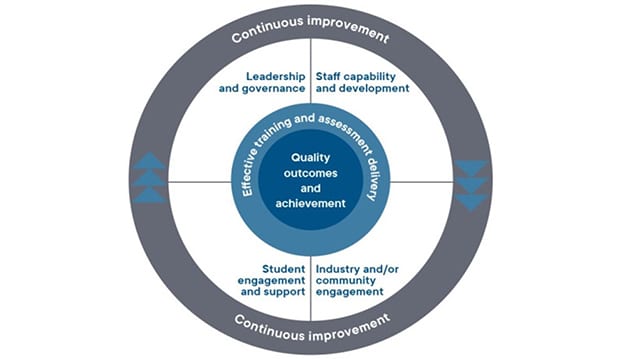
Pic courtesy: ASQA’s current model of self-assurance 

As a registered training organisation (RTO), we are required to have systems and processes in place to ensure our practices meet the Standards for Registered Training Organisations 2015. Part of these requirements includes having a compliance process and system for reviewing our current training and assessment practices, systems, and policies.

As part of our commitment to quality, we continually review, improve and self-assure our practices. This helps us to maintain compliance with the Standards and to improve the quality of our services.

This includes seeking feedback from all stakeholders including students and other involved parties, to identify opportunities for improvement and maintain confidence in the delivery of your services.

Self-assurance is another key part of ensuring the quality of your training provision. This means having your own systems and practices in place to systematically monitor, evaluate and improve your performance. By doing this, you can be sure that you’re providing the best possible service to your students.

Reviewing and improving a training organisation is an ongoing process. It requires constant vigilance, self-assessment and a willingness to change.

Organisations must be able to adapt to the ever-changing needs of their clients and the ever-changing landscape of the training industry. They must also be able to keep up with the latest research and developments in their field.

A good way to review and improve a training organisation is to periodically conduct internal and external audits. These audits can help identify areas where improvements are needed.

External audits can be conducted by independent bodies such as accreditation organisations or government agencies. Internal audits can be conducted by the organisation itself or by an external consultant.

Either type of audit should include a review of the organisation’s policies and procedures, as well as its training programs and materials.

Audits should also include interviews with staff, clients and other stakeholders. These interviews can provide valuable insights into how the organisation is perceived by others and where improvements might be needed.

Organisations should also periodically review their financial statements to ensure they are using their resources effectively. Financial reviews can help identify areas where cost savings could be made or where revenue could be increased.

Finally, organisations should always be looking for ways to improve the quality of their service. This can be done through customer satisfaction surveys, feedback forms and other mechanisms.

So, what does all this mean in practice? Here are some strategies on how to ensure that you’re continually reviewing and improving your training and assessment practices:

  1. Seek feedback from all stakeholders/involved parties.
  2. Use this feedback to identify areas for improvement.
  3. Change your training and assessment practices accordingly.
  4. Keep a close eye on your performance through internal and external audits, and make sure that you’re meeting your own high standards.
  5. Check your data and indicators regularly to ensure that you are providing a high-quality service.
  6. Monitor your own performance and compare it against national standards.
  7. Evaluate your performance to identify areas for improvement and make changes to your services accordingly. 
  8. Always be open to making further improvements, no matter how small they may be.

By following these strategies, you can be sure that you’re providing the best possible service to your students, and that your training provision is of the highest quality.

Subscribe to Our Newsletter

Subscribe to our newsletter to get our newest articles instantly!

Vijay October 24, 2022
Share this Article
Twitter Email Copy Link Print
Previous Article RPL – What you need to know
Next Article What are the plans for improving the vocational education and training sector – what are we missing?
Leave a comment

Leave a Reply Cancel reply

Your email address will not be published. Required fields are marked *

Editor's Pick

Top Writers

Opinion

Interview with Wendy Perry – Managing Director, Workforce BluePrint

BIO: Wendy Perry Managing Director Workforce BluePrint Wendy Perry who…

November 24, 2022

The Instructional Design Process – The Five Steps

When designing training programs, instructional designers…

October 24, 2022

In vocational education and training, what is assessment?

In the VET sector, assessment refers…

August 12, 2022

Principles of assessment

An easy way to learn them:…

August 12, 2022

Rules of evidence

An easy way to learn them:…

August 12, 2022

You Might Also Like

RTO

Management of operational risks in training organisations

The management of operational risk is an essential procedure for organisations of any size. Organisations are able to make educated…

3 Min Read
RTO

Strategies on how to promote your training organisation to international students

As the number of international students studying in Australia continues to grow, so does the competition among training organisations to…

9 Min Read
RTO

Creating a work environment that values employees

It is essential for training organisations to create a work environment that values employees. A positive work environment will not…

6 Min Read
AuditsRTO

The purpose of due-diligence audits

Due diligence is an important process to learn about when considering becoming a buyer for a registered training organisation (RTO).…

6 Min Read
Education Times

News

Teaching

Learning

Jobs

More

Subscribe

  • FAQ
  • Newsletters
  • Topics

© Education Times Network. Online Media Solutions. All Rights Reserved.

Removed from reading list

Undo
Welcome Back!

Sign in to your account

Lost your password?